






Productive Session for BCW Advocacy in Albany
The BCW’s state advocacy program was actively engaged throughout the session including reaching out to legislators during the final last hours of the session. Countless memorandums of support and opposition on bills of importance to the business community were issued to the Legislature; and countless Zoom meetings were held. Additionally, the BCW was in constant contact with Legislative leaders and delegation members on a weekly basis to make sure our member’s concerns were heard and addressed.
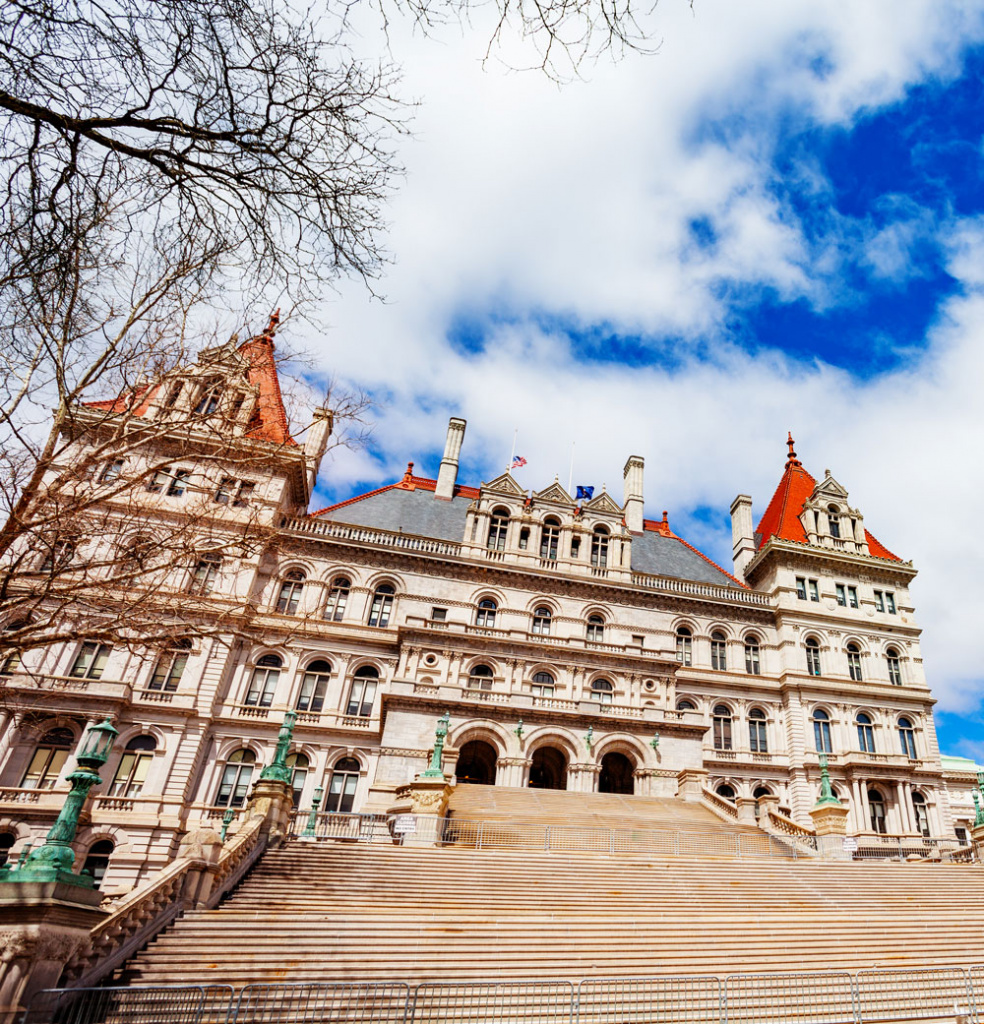
In mid-May the BCW’s Annual Lobby Day was held in Albany where BCW members were briefed by Senate Majority Leader Andrea Stewart-Cousins and the Westchester Senate delegation; members of the Westchester Assembly delegation; and other important State leaders and stakeholders. It gave BCW members the opportunity to voice their concerns on a number of bills.
Obtaining a full gaming license for Empire City Casino by MGM Resorts has been one of the BCW’s top legislative priorities over the last seven years. The BCW is pleased that on the last day of the legislative session a new Casino Bill (S.9673A/A.10572) was passed by both houses. This bill will speed up the delayed downstate casino process by implementing a definitive timeline to move forward on an important economic initiative that has been long overdue.
Another bill that the BCW advocated for that also passed both houses of the Legislature is the Short-Term Rental legislation (S.885C/A.4130C) to regulate the short-term rental of private dwellings outside of New York City by requiring dwellings to be registered, collect sales and occupancy taxes, and adhere to fire and safety regulations.
Here are some of the bills that the BCW opposed that did not pass both houses of the Legislature this session.
Packaging Reduction and Recycling Infrastructure Act (S.4246D/A.5322D): that would have restricted the sale of plastic packaging and other targeted materials, as well as require source reduction of all packaging types.
Consumer and Small Business Protection Act (S.795A & A.7138): that would have greatly expanded New York’s Deceptive Acts and Practices Law (GBL §349) and exposed small and medium-sized businesses to frivolous lawsuits.
New York HEAT Act (S.2016B/A.4592B): that would have prohibited some uses of natural gas and mandated the discontinued use of portions of the gas distribution system resulting in significant uncertainty for numerous in-state businesses and adversely impacting decisions to invest or re-invest in gas-dependent operations.
Clean Deliveries Act (S.2127C/A.1718C): that would have mandated significant new construction and operational standards for “heavy distribution warehouses.”
Workers Compensation (S.9840/A.10561): that would have dramatically increased short-term disability benefits and led to massive premium increases for the state’s small businesses.
One bill that the BCW opposed that did pass the Legislature this session is a Brownfields bill (S.5868B/A.7491B) that would amend the Environmental conservation law by imposing prevailing wage requirements in order to qualify for Tangible Property Tax Credits.
Similar News Items
Deputy Secretary Sean Ewart Aligns with CEAC Priorities: Demand Response, Solar + Storage, and All-of-the-Above Solutions WHITE PLAINS, N.Y. — March 27, 2026 — Governor Kathy Hochul’s Deputy Secretary for Energy, Sean Ewart, delivered a direct address to Westchester’s business community today, affirming a message central to the Business Council of Westchester’s (BCW’s) Clean Energy […]
Westchester Innovation Network (WIN) participant Right Route recently achieved a new milestone at the New York Association for Pupil Transportation (NYAPT) conference in Albany. Following a successful local pilot program, the Ossining-based startup led by founder and CEO Sergio Alfonso participated for the first time as a vendor in the conference’s trade show. Previously involved […]
The Business Council of Westchester (The BCW), with support from Google.org, convened its inaugural AI Intensive program this week, bringing together a dynamic group of local small business leaders committed to understanding and integrating artificial intelligence into their operations. The session marked an important milestone as Cohort 1 officially comes to a close, capping off […]
Become A Member
Join the county’s largest and most influential business organization today.
JOIN NOW!