






Business Leaders Chart the Rise of the Experiential Economy
Westchester County business and civic leaders say the region is emerging as a textbook case of how retail, real estate, and hospitality can thrive in an “experiential economy” where people value connection, memory, and community as much as products and services.
That was the core message of a February 25 webinar hosted by the Business Council of Westchester (BCW) in partnership with Fordham University’s School of Professional and Continuing Studies and its Real Estate Institute.
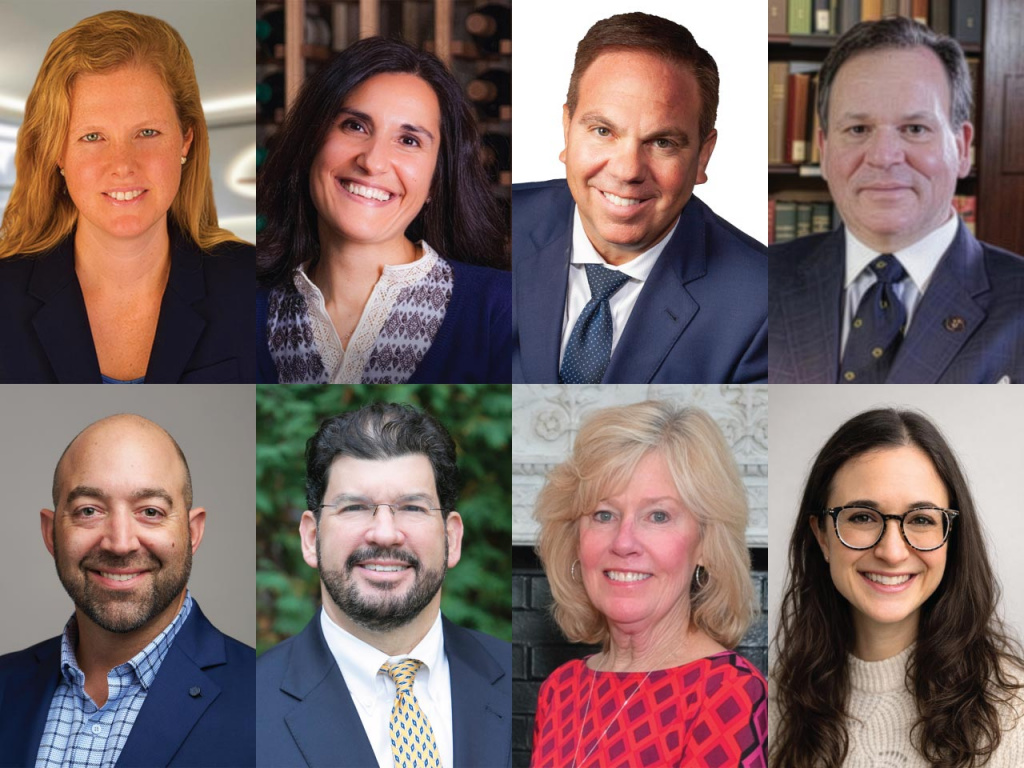
The webinar included a keynote presentation by Sarah Jones-Maturo, President of RM Friedland, followed with commentary from panelists Luisa DeCicco, Director of Human Resources at DeCicco & Sons; Craig Deitelzweig, President and CEO of Marx Realty at Cross County Center; John Dorman, General Manager Emeritus at the University Club of New York; Anthony Giallanzo, CEO at No Limit Ninja Yonkers; Peter and Karen Herrero, Owners of the New York Hospitality Group; and Jamie Weiss-Yagoda, Senior Director of Community Outreach and Communications at the Shames JCC.
“There could not be a more timely discussion than to talk about how our economy is transforming to an experiential economy, talking about the transformation of retail and hospitality,” said BCW President and CEO Marsha Gordon, who moderated the webinar.
Gordon framed the conversation as both an economic development and real estate story: businesses that lean into experience are not just surviving but driving investment, job creation, and higher property values across the county.
Jones-Maturo cited local examples of the experiential economy in action: big‑box stores converted into trampoline parks; kids’ play centers; and pickleball clubs.
“The experience economy is in‑real‑life experiences. It’s driven by exploration. It’s personal and memorable, and… it’s beyond the transaction,” said Jones-Maturo. “What does it mean for retail real estate? … The impact really is the surge in the five F’s: fun, family, fitness, food, and fashion discounters.”
DeCicco described how the family grocer has deliberately repositioned itself as a community hub with a highly personalized touch.
“We don’t want you just to have the mere shopping,” said DeCicco. “We’re going from a simple employee to now a concierge. Every employee in our stores is a concierge.”
Deitelzweig explained how the open-air mall draws over 14 million visitors a year with events, music festivals, Halloween and Oktoberfest activations, yoga and Zumba on the lawn, and an upgraded food mix. He also announced a major new phase.
“There will be a new front door to the center, which will be a four‑acre park… and then there’ll be 60,000 square feet of new retail… and we already have commitments for all but 6,000 square feet of that space,” said Deitelzweig.
Dorman argued that hospitality is now a central determinant of real estate performance.
“If you don’t have hospitality in your real estate… it becomes transactional, and there’s no other good reason to go there except to make a purchase,” said Dorman.
Giallanzo described his obstacle‑course gym in Yonkers as an anti‑screen antidote and a confidence engine.
“We’re not just selling an admission ticket… We’re building confidence… transformation happens when someone leaves stronger mentally than they walked in,” said Giallanzo. “People leave home for what they can’t stream – connection, energy, belonging… you have to offer something memorable, social, something that’s emotionally meaningful.”
Karen Herrero said her business competes on memory and meaning, not just menus.
“Hospitality – what is it? It’s a feeling that we try to give our customers. It’s a memory… Why come to Sam’s (of Gedney Way) when there are so many other restaurants?” said Karen Herrero.
Co‑owner Peter Herrero said he is exporting their same philosophy into hospitals, convents, and other institutional settings via consulting and foodservice contracts.
“What I love about hospitality today… we meet our customers where they are,” said Peter Herrero.
Weiss-Yagoda described the Shames JCC as a community hub.
“We bring people together to have shared experiences,” said Weiss-Yagoda. “We’ve become a high‑caliber cultural spot which has filled an important gap here in Westchester… We’re the spot that now people look at on a Saturday night to see what’s going on.”
Event co-host Dr. Anthony Davidson, dean of Fordham’s School of Professional and Continuing Studies, said the lines between real estate and hospitality have fundamentally blurred.
“In recent years, the lines between real estate and hospitality have really become increasingly blurred… mixed use projects cater now to the evolving preferences of travelers and investors, offering diverse and flexible options for living, working and playing,” said Davidson.
In a closing Q&A, panelists pointed to three forces that will shape the next decade of experiential real estate:
Environment & energy: Younger consumers increasingly demand visible sustainability investments, from refrigeration systems to clean‑energy retrofits.
Gen Alpha: The next generation will be more socially and environmentally conscious, with volunteerism and purpose‑driven experiences as key engagement levers.
Zoning & regulation: Several speakers noted that local codes still assume single‑use properties, complicating efforts to embed food, beverage and “experiential” concepts into offices and other formats.
For Westchester, the experiential economy is no longer an abstract trend—it is reshaping streetscapes, payrolls, and property values in real time.
Click here to watch a recording of the online seminar.
Similar News Items
In contrast, Brasch stressed that White Plains is open for business. He highlighted the planned Galleria redevelopment, which he called the largest project in New York State outside New York City, with an estimated value of $2.5 billion and up to nine towers. The project could create roughly 800 units of workforce‑oriented affordable housing, supported […]
The Westchester Innovation Network’s (WIN) City Labs initiative is partnering with the Village of Sleepy Hollow and Iona University’s Hynes Institute for Entrepreneurship & Innovation on a design-thinking project. Rather than starting with a pre-defined assignment, the Iona students are defining the problem themselves after a briefing with the Mayor, Trustees and Village department heads. […]
White Plains Mayor Justin Brasch joined the Business Council of Westchester Valley Bank Leadership Conversations on March 13 to discuss his new administration’s vision for the city. Brasch, a Democrat, began his conversation with BCW President and CEO Marsha Gordon by drawing a sharp distinction between his approach to governing and what he called the […]
Become A Member
Join the county’s largest and most influential business organization today.
JOIN NOW!