





BCW, Westchester Green Business, and Westchester County Hold Real Estate Roundtable
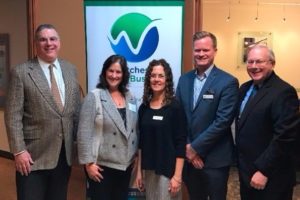
A real estate roundtable sponsored by the WGB partners, The Business Council of Westchester and Westchester County drew 40 local real estate leaders on Feb. 15 to discuss best practices and learn about sustainability trends that are driving real estate values.
The event, hosted by LeChase Construction in Armonk, was attended by a variety of real estate professionals, among them: owners, landlords, brokers, tenants, architects, engineers, contractors, planners, energy consultants and other real estate related organizations. Participants shared recent news and latest trends, offered industry insights and discussed opportunities to further support sustainable real estate and green building practices.
Here are some of the best practices shared at the roundtable:
Benchmarking: “You can’t change what you don’t measure.”
It’s important for non-residential properties to sub-meter individual tenants. While WGB provides tenants with tools to best track their usage, having the actual end use breakdown further engages tenants and allows them to measure progress and track reductions.
Stabilizing Overhead: “Resiliency goes hand-in-hand with sustainability.”
With a history of operating costs, businesses can strategically implement sustainable upgrades. There is then an opportunity to manage future expectations, keep operating costs stable and gaining the power of consumption management.
ROI: “We must go beyond annual savings or paybacks.”
While businesses have traditionally looked for a 3 to 5 year payback on energy efficiency upgrades, businesses must go beyond annual savings or paybacks and begin to view it as making valuable, long-term infrastructure improvements.
Marketability of Assets: “There is an opportunity to educate tenants.”
An opportunity exists to educate tenants, residential buyers and green-conscious millennials on energy efficiency measures they should seek-out at home and work.
Expediting Green Projects: “Westchester has 48 municipalities, in a home-rule state.”
With 48 municipalities, there are inconsistencies with the permitting and approval processes throughout Westchester County. Attendees stressed the importance of streamlining and expediting green projects, retrofits and upgrades – to encourage and promote sustainable development.
More News
The Business Council of Westchester (BCW) is proud to recognize and extend our sincere appreciation to the Friend Sponsors of our 2026 Annual Dinner: Celebrating Leadership & Legacy. This signature event brings together Westchester’s business and community leaders for an evening dedicated to celebrating the individuals, organizations and partnerships that continue to shape our region’s […]
Noam Bramson, Executive Vice President of the Business Council of Westchester (BCW), was pleased to attend the announcement of a $10 million Department of Defense (DOD) grant awarded to BCW member New York Medical College (NYMC) in Valhalla. The significant investment will support groundbreaking research and training initiatives aimed at improving lifesaving medical care in […]
According to data recently published by the New York State Comptroller’s Office, the Village of Croton-on-Hudson has recorded the lowest tax levy growth among all reporting Westchester County villages for the between 2016 and 2025. Across the 20 villages (excluding coterminous town-villages) in Westchester County, levy increases ranged widely, with a majority of villages seeing […]
Become A Member
Join the county’s largest and most influential business organization today.
JOIN NOW!
Leave a Comment
You must be logged in to post a comment.